
Introduction
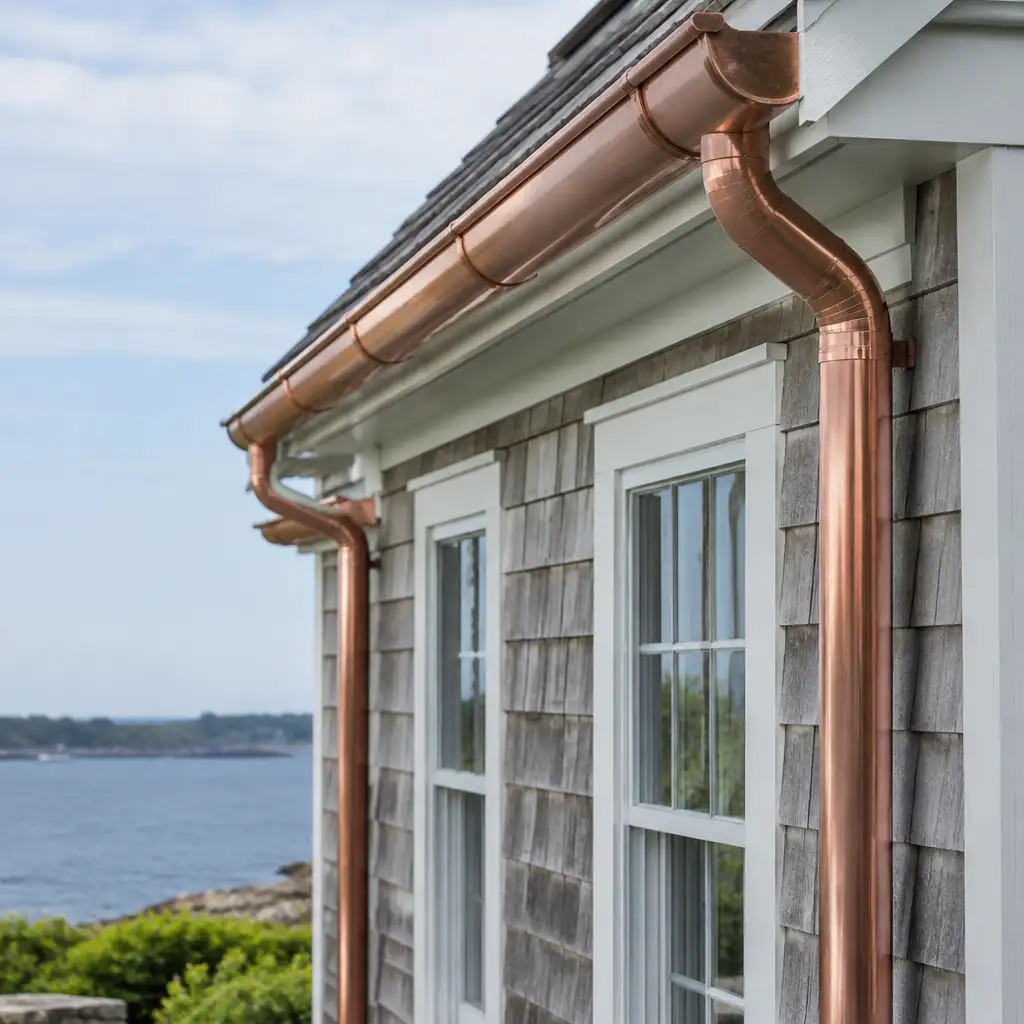
Copper gutters Massachusetts contractors install on historic properties deliver longevity and architectural integrity when maintained correctly. For restoration projects across Cape Cod and coastal New England, preventative maintenance and systematic repair prioritization extend service life, preserve patina, and reduce unplanned scope creep. This article provides contractor-focused guidance on inspection schedules, corrosion indicators, hanger and joint checks, and triage strategies specific to copper gutters in salt-air environments.
Readers are expected to be roofing contractors, restoration specialists, and sheet metal fabricators responsible for long-term care and budgeting on coastal historic sites. The recommendations reflect practical, trade-level practices and the fabrication realities associated with half-round and ogee profiles, typical in New England historic work. Where fabrication or replacement is required, Cape Cod Copper’s trade-only shop capabilities and material options can support project needs.
This guide emphasizes measurable inspection checkpoints, seasonal maintenance rhythms for coastal Massachusetts, and a pragmatic framework for prioritizing repairs by risk and cost. It also references common system components—gutters, downspouts, leader boxes—and clarifies when to repair in place versus when to schedule fabrications or phased replacements.
Throughout the article you’ll find links to product categories and contact resources to assist estimating and sourcing custom components like leader boxes and downspouts. These links are intended for trade professionals needing precise fabrication or replacement parts.
- Introduction
- Understanding Copper Gutter Profiles: Half-Round and Ogee
- Seasonal Maintenance Schedule for Coastal Salt-Air Exposure
- Corrosion Inspection and Patination: What to Look For
- Hanger, Fastener and Joint Checks for Long-Term Performance
- Prioritizing Repairs: Cost-Effective Triage for Historic Sites
- Practical Repair Techniques and When to Fabricate Replacements
- Frequently Asked Questions
Understanding Copper Gutter Profiles: Half-Round and Ogee
Half-round and ogee profiles dominate historic restoration work across Massachusetts. Half-round gutters are simple semicircular troughs that shed debris more readily and are easier to solder and seam in the field. Ogee gutters provide a period-correct decorative silhouette but present slightly more complex mounting and debris retention considerations. For both profiles, material thickness and fabrication quality directly influence longevity in coastal conditions.
Typical weights used on restoration projects include 16 oz, 20 oz, and 24 oz copper. Heavier gauges resist deformation from accumulated debris and mechanical loads, but they add cost and require compatible hanger spacing and roof edge details. When evaluating existing systems, note the material weight and profile: thin, flattened half-round or distorted ogee sections are often early indicators that hangers or fasteners have failed or the system experienced concentrated loads.
Profile selection affects maintenance practices. Half-round channels promote self-cleaning via flow, so routine downspout clearances and outlet checks are often sufficient. Ogee systems may trap leaves in decorative lips, requiring more frequent hand-cleaning and strategic placement of removable strainers at outlets. Recognizing these differences informs realistic maintenance schedules and cost projections for long-term care on historic properties.
Seasonal Maintenance Schedule for Coastal Salt-Air Exposure
Coastal Massachusetts accelerates certain failure modes for copper gutters due to salt-laden air, wind-driven debris, and freeze-thaw cycles. For Cape Cod and southeastern Massachusetts sites, establish a minimum seasonal service schedule: spring inspection after winter storms, mid-summer clearing after the leaf and seaweed season, fall preparation for leaf fall, and an early-winter quick check to ensure outlets and downspouts remain unobstructed.
Spring inspections should verify that patina development did not mask stress cracks near hangers or seams. Salt deposition can concentrate in corners and behind leader heads; use non-abrasive rinses during service and avoid harsh chemicals that can remove protective patina. For buildings exposed directly to spray, consider more frequent rinsing and inspection—every 3–4 months—rather than only seasonal service.
Document each seasonal visit with a simple checklist: outlet condition, downspout flow test, solder joint integrity, hanger spacing and fastener condition, visible corrosion or pitting, and leader box inlets. Consistent documentation helps contractors justify phased repairs and supports preservation specifications for municipal or institutional historic projects.
Corrosion Inspection and Patination: What to Look For
Real copper does not “rust” like ferrous metals, but it undergoes patination and can suffer localized corrosion or dezincification-like effects where dissimilar metals are present. Inspect for green-blue patina, which is generally acceptable and protective, versus active pitting or undercut corrosion at seams and hanger attachment points. Pitting often begins where salt accumulates, where moisture pools, or where finishes were damaged.
Use a flashlight and mirror to inspect the underside of the gutter run and soldered seams. Look for hairline cracks near seams, displacement at miters, or channels of white salts indicating trapped chloride deposits. Check around fasteners and roof edge terminations where capillary action can draw salt into seams. If you see active pitting or loss of section, prioritize localized repair or replacement of the affected run.
When documenting corrosion, note the location, approximate linear footage affected, and whether the damage is surface-level patina or section loss. This differentiation directly impacts repair strategy: surface patina typically requires cleaning and preventative measures, while section loss mandates patching or panel replacement. For fabrication-dependent repairs, record the profile, gauge, and existing hanger layout to expedite shop-made replacement components.
Hanger, Fastener and Joint Checks for Long-Term Performance
Hangers, fasteners, and joints are the most common failure points in aged copper gutters. Over time, screws back out, wood blocking rots, and soldered seams fatigue. A routine hanger and joint inspection should verify hanger spacing, attachment substrate integrity, rivet or screw condition, and that seams are watertight. For historic profiles, matching original hanger spacing and concealment often matters to preservation officers, so document any changes.
Perform a physical pull test on representative hangers—apply moderate upward force to confirm secure attachment. Where wood blocking shows decay or fasteners have torn through, plan for substrate repairs before reattaching new hangers. For soldered joints, check for hairline separation and test with a small probe to detect movement; loose joints can be reflowed, but widespread seam fatigue usually suggests section replacement.
Fastener selection is critical in coastal environments; use compatible stainless steel or copper fasteners to avoid galvanic corrosion. Where the original installation used non-compatible metals, prioritize replacement with appropriate materials during repairs. Proper hanger spacing, secure attachment, and correct fastener materials will reduce future maintenance frequency and protect the gutter profile’s form.
Prioritizing Repairs: Cost-Effective Triage for Historic Sites
Historic properties often face budget constraints and preservation requirements. Prioritize repairs by risk to the building envelope and the potential for escalation: 1) leaks that threaten masonry, trim, or structure; 2) failed hangers leading to sagging runs; 3) blocked outlets causing overflow onto historic finishes; 4) cosmetic patina issues that do not expose substrate. This order minimizes immediate damage while allowing phased budgeting for full restoration.
Create a three-tier repair plan for each building: emergency (address within weeks), near-term (address within months), and long-term (schedule into annual capital work). Emergency items include active leaks at seams or leaders that dump water onto sensitive fabric. Near-term items include partial section replacement where corrosion is localized. Long-term planning covers full-run replacement, comprehensive leader box fabrication, or seamless integration of new copper runs to match historic profiles.
When leader boxes or decorative terminations are failing, consider fabricating replacements in the shop to preserve historic appearance. Custom leader boxes can be produced to original dimensions with correct profile and brass or copper detailing. For fabrication requests, provide measured drawings or templates; Cape Cod Copper’s trade-only shop can produce leader boxes and finials to match historic details without offering retail service to homeowners.
Practical Repair Techniques and When to Fabricate Replacements
Simple field repairs—solder reflow, patch plating, and localized reseaming—are suitable when damage is limited and substrate is structurally sound. Use lead-coated copper when required by preservation specs or to match adjacent work. For hairline seam leaks, clean the area, remove patina, reflow solder, and test with a flow test. For hanger failure, replace with copper or stainless hangers of the correct profile and restore original spacing.
Fabrication is warranted when runs have lost section, profiles are warped, or where matching historical profiles (half-round or ogee) is critical. Shop-fabricated sections guarantee profile accuracy and seam quality, and prefabrication reduces on-roof time. Provide the shop with measured drawings, photos, and notes on existing gauge and profile. Cape Cod Copper specializes in custom fabrication for trade professionals and can produce half-round and ogee sections in specified gauges.
When preparing cost estimates, include scaffolding or access costs, staged installation timelines to protect finishes, and post-installation rinsing for salt removal. Communicate to clients that phased work can meet preservation goals while spreading budgetary impact. Maintain documentation of replaced components, including material gauge and fabrication notes, to assist future maintenance and to uphold restoration records for historic review boards.
Frequently Asked Questions
Q: How often should copper gutters on Cape Cod historic buildings be inspected?
A: Inspect at least seasonally—spring, mid-summer, fall, and early winter—with additional inspections every 3–4 months for sites with direct sea spray exposure. Seasonal inspections catch issues before they escalate.
Q: When is it better to replace a gutter run rather than repair seams?
A: Replace when there is significant section loss, widespread pitting, multiple compromised seams, or when the profile is deformed such that repair will not restore proper flow and appearance. Localized seam leaks can often be reflowed; structural degradation warrants replacement.
Q: What information should contractors supply when ordering shop-fabricated replacements or leader boxes?
A: Provide profile type (half-round or ogee), material gauge (e.g., 16 oz, 20 oz, 24 oz), measured drawings or templates, photos of adjoining details, and notes on hanger spacing and termination details. Clear documentation expedites accurate fabrication and reduces on-site adjustments.
Copper gutters and downspouts products and specifications inform gauge and profile decisions early in estimating. For decorative terminations and historic leader heads, see leader boxes and finials. To discuss fabrication schedules or request a trade quote, contact Cape Cod Copper and provide measured drawings or templates.
Need copper details for a historic restoration, coastal project, or custom build? Cape Cod Copper fabricates architectural copper components for demanding New England projects, including flashings, gutters, chimney caps, vents, leader boxes, finials, and specialty copper work. Call (508) 946-1999 or email capecodcopper2@gmail.com to discuss your order.