
Introduction
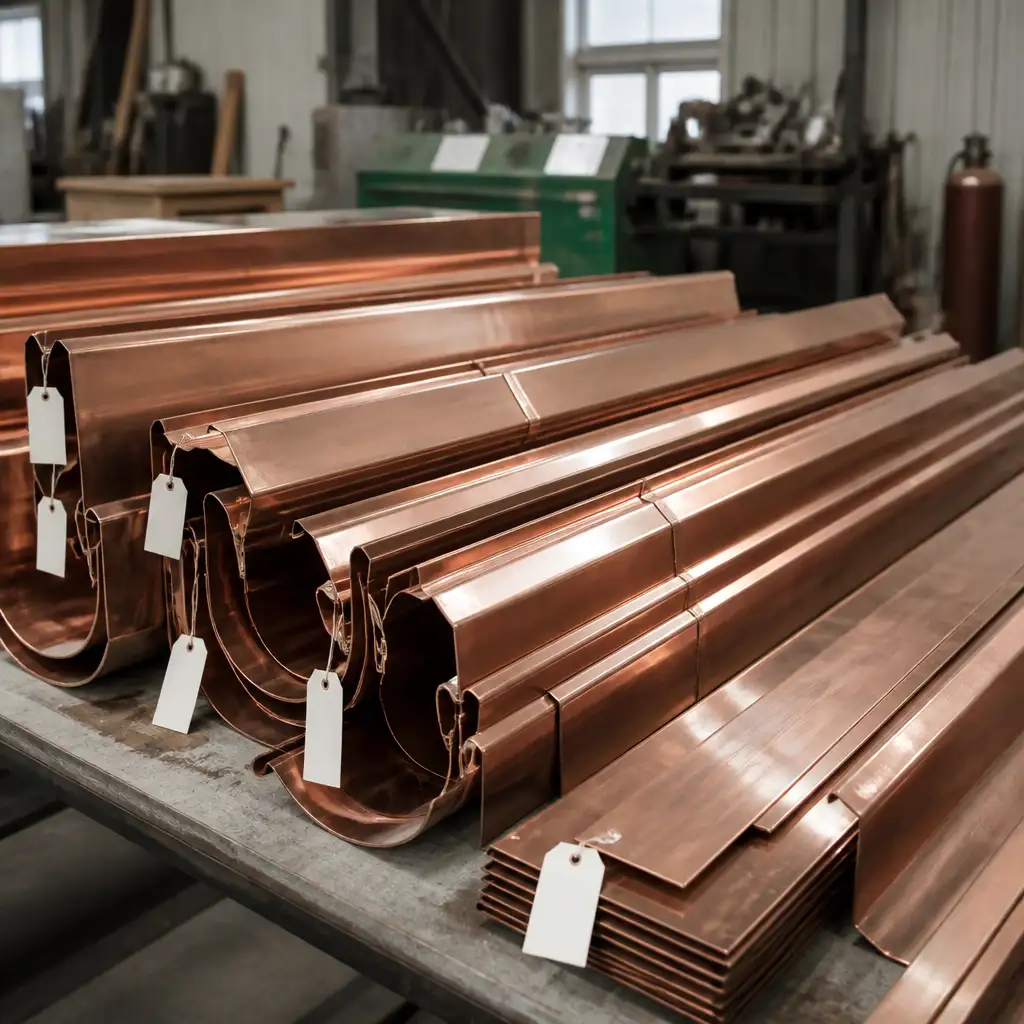
For roofing contractors working in Massachusetts and across New England, coordinating custom copper fabrication with on-site schedules is a frequent operational challenge. This guide explains how contractors can streamline procurement and scheduling when partnering with a trade-only copper fabricator, with practical steps for submitting shop drawings, managing lead times, batching orders, performing quality checks, and communicating effectively to minimize delays and on-site rework. The target keyword custom copper fabrication appears throughout this guide where it matters most.
Written for professional trades—roofing contractors, restoration specialists, builders, and suppliers—this article focuses on trade workflows, file and measurement standards, and realistic timelines you can use on typical projects in coastal Massachusetts and Southeastern Massachusetts. It assumes you work with a fabrication partner that serves only the trades and understands architectural sheet metal tolerances and historic restoration demands.
We’ll cover both the paperwork side of shop-drawing submission and the field practices that protect your crew’s time and client budgets. Examples include sample timelines for common items, recommended digital file formats and measurement conventions, batching strategies for efficient production runs, and factory quality checks that cut down returns and callbacks.
Practical, contractor-focused, and grounded in New England project realities, the guidance below aims to improve the throughput between your estimating desk, the site, and the fabricator’s shop so projects stay on schedule and on budget.
- Introduction
- Shop drawings and file standards for custom copper fabrication
- Lead-time expectations and batching strategies
- Field measurement and verification best practices
- Factory quality control and pre-shipment checks
- Scheduling, delivery windows, and workflow integration
- Tips for reducing on-site rework and avoiding delays
- Frequently Asked Questions
Shop drawings and file standards for custom copper fabrication
Clear, standardized shop drawings are the foundation of efficient custom copper fabrication. Provide a single drawing set that includes plan, elevation, and section views where relevant, and call out material weights (16 oz, 20 oz, 24 oz), seams, soldered joins, and any finish requirements. Label all dimensions with a consistent unit (inches and fractions preferred in U.S. construction) and include reference elevations relative to a fixed project datum.
Preferred digital files: PDF for issued-for-fabrication drawings, and DWG/DXF for any CAD geometry that must be imported directly into CNC or roll-forming equipment. If you submit photos, include annotated notes indicating where photos correspond to the drawing details. Where possible, supply a single cover document that lists scope items, material schedules, and delivery locations for each fabricated assembly.
Adopt a naming convention that the shop can sort: JOBNUMBER_CONTRACTOR_ITEM_DESCRIPTION_REVx (for example: 2107_ACME_CHIMNEYCAP_REV2.pdf). This reduces file confusion and speeds up shop review. Be explicit about allowances for field-fit versus shop-fit; if certain seams are intended to be field-soldered or left for on-site trimming, note that on the drawing.
Early coordination reduces revisions. Share initial sketches during estimation and request a preliminary shop drawing back for quick review. This iterative approach reduces back-and-forth later and saves valuable shop scheduling time.
Lead-time expectations and batching strategies
Lead times vary by complexity, material, and shop load, but planning to industry norms helps you set realistic schedules. For routine flashings, gutters, and simple roof panels expect a standard fabrication lead time of 1–3 weeks. More complex items—curved panels, leader boxes, ornate finials, or historic reproductions—can require 3–6 weeks or longer depending on backlog and tooling needs.
Batching similar items together is one of the most effective production strategies. Combine multiple roofs’ flashing sets or group all gutter runs by profile so the shop can run longer, more efficient production cycles. Batching reduces setup time on CNC and roll-forming machines and can significantly shorten effective lead time per item.
Set internal procurement milestones: RFQ, shop drawing issuance, shop drawing approval (allow 2–3 business days for review), fabrication start, quality inspection, and shipment. Build a simple timeline in your project schedule and share it with the fabricator. Where possible, schedule fabrications to align with predictable installation windows—avoid late summer peak shipping weeks and major holiday periods in the Northeast.
Discuss minimum order quantities or batch minimums with your fabricator early. A trade-only partner experienced in contractor workflows can often consolidate multiple small jobs into a single production run, saving both of you time and cost without compromising lead time predictability.
Field measurement and verification best practices
Accurate field measurements are critical to avoid on-site rework. Use a single measurement standard across the team and document measurements on a verification form that references the original drawing detail. For custom copper fabrication, call out roof pitches, distances to fixed verticals (chimney faces, parapets), and critical offsets from eaves or ridge lines.
Whenever possible, measure and provide straight-line lengths rather than along-the-curve lengths for curved pieces; indicate radii and centerlines for compound curves. For gutters and downspouts, provide runs broken into installable segments with clear reference points for miters and offsets. If multiple trades touch the same detail, include a verified-as-built photo showing the reference points and a date stamp so the shop sees the latest field condition.
Use a verification workflow: site measure, produce a field sketch, upload photos and sketches to the job folder, and confirm in writing to the fabricator. Include who measured, date, and contact. When items are marked as measured-for-fabrication, treat those measurements as final and avoid changing them without a revised drawing and mutual agreement on schedule impacts.
Factory quality control and pre-shipment checks
A reputable trade-only fabricator will run a standard QC checklist before items leave the shop. Key checks include material gauge verification, seam alignment, solder/tin checks where specified, dimension verification against drawings, and packaging for transit. Ask the shop for a pre-shipment QC report on larger or complex orders.
Specify tolerance expectations on your drawings (for example, +/- 1/16″ on critical dimensions) so the fabricator knows what requires tighter control. For historic restorations in New England where profiles must match existing fabrications, require sample mock-ups or approve a prototype piece before full production.
Inspect deliveries on arrival against the shop’s packing list. Verify quantities, dimensions, and finish. If issues are discovered, photograph and document them immediately and notify the fabricator within the agreed claim window. A trade-only fabricator experienced with contractors will generally prioritize quick remedies when documentation is clear and communication is timely.
Scheduling, delivery windows, and workflow integration
Integrate fabrication milestones into your CPM schedule: tie shop drawing approval to procurement milestones and fabrication completion to the on-site installation float. Use fixed delivery windows rather than open-ended orders—schedule deliveries for start-of-day or mid-day so crews can plan unloading and staging without disrupting site logistics.
When multiple trades are working on a roof (roofing crew, mason, metal crew), coordinate handoffs in advance. For copper roof panels or complex transition flashings, plan for the metal crew to arrive immediately after the roofing underlayment or set a buffer that accounts for New England weather variability. Where feasible, create buffer days in the schedule for coastal projects that commonly encounter weather delays.
Use clear delivery instructions: delivery address, point of contact, onsite phone, preferred unloading area, and any restricted access or weight limitations. If the fabricator offers staged deliveries, request partial shipments timed to the installation sequence to reduce on-site staging requirements and risk of damage. For repeat clients, a reliable shop will adjust production runs to match phased installations across multiple properties.
Tips for reducing on-site rework and avoiding delays
Preventing rework saves labor and protects margins. Three practical strategies: document everything, approve shop drawings quickly, and maintain a single source of truth for measurements. Make one person responsible for sign-off on shop drawings so approvals are consistent and timely.
Use mock-ups for complicated details—corners, copings, penetrations, and roof-to-wall transitions. A single approved mock-up can serve as the fabrication standard and reduce subjective interpretation. For historic work, provide detailed photos and, when possible, measured templates to the shop to reproduce exact profiles.
Train your crews on the differences between shop-fit and field-fit items. If a detail is intended to be field-trimmed, mark it clearly on both the drawing and the delivered piece. Keep a job folder with all approved drawings, photographs, and measurement forms on the truck for quick reference. Clear expectations and consistent documentation are often the decisive factors in eliminating callbacks.
When disputes occur, use the fabrication drawings and the pre-shipment QC report as the baseline for resolution. A trade-only fabricator familiar with Massachusetts restoration and coastal construction scenarios will work with you to troubleshoot and produce corrective pieces quickly.
Frequently Asked Questions
Q: What is a realistic lead time for custom copper flashing and gutters in Massachusetts?
A: For standard flashings and common gutter profiles, plan 1–3 weeks. Complex or decorative items, historic reproductions, and large production runs typically require 3–6 weeks. Always confirm with the fabricator and allow review time for shop drawings.
Q: What file formats should I submit for shop drawings and fabrication files?
A: Submit PDF for issued-for-fabrication drawings and DWG or DXF for CAD geometry intended for CNC or roll-forming. Include annotated photos and a cover sheet listing material gauges, finishes, and delivery locations.
Q: How can I minimize on-site fitting and rework when ordering custom copper components?
A: Use verified field measurements, approve mock-ups for complex details, batch similar items, and require the fabricator’s pre-shipment QC report. Clear, single-person approvals on shop drawings also reduce inconsistencies that lead to rework.
Looking for a reliable trade-only copper fabrication partner? Cape Cod Copper works exclusively with roofing contractors, suppliers, builders, and other professional trades, providing quality copper products with craftsmanship, precision, and dependable service. Call (508) 946-1999 or email capecodcopper2@gmail.com to get started.