
Introduction
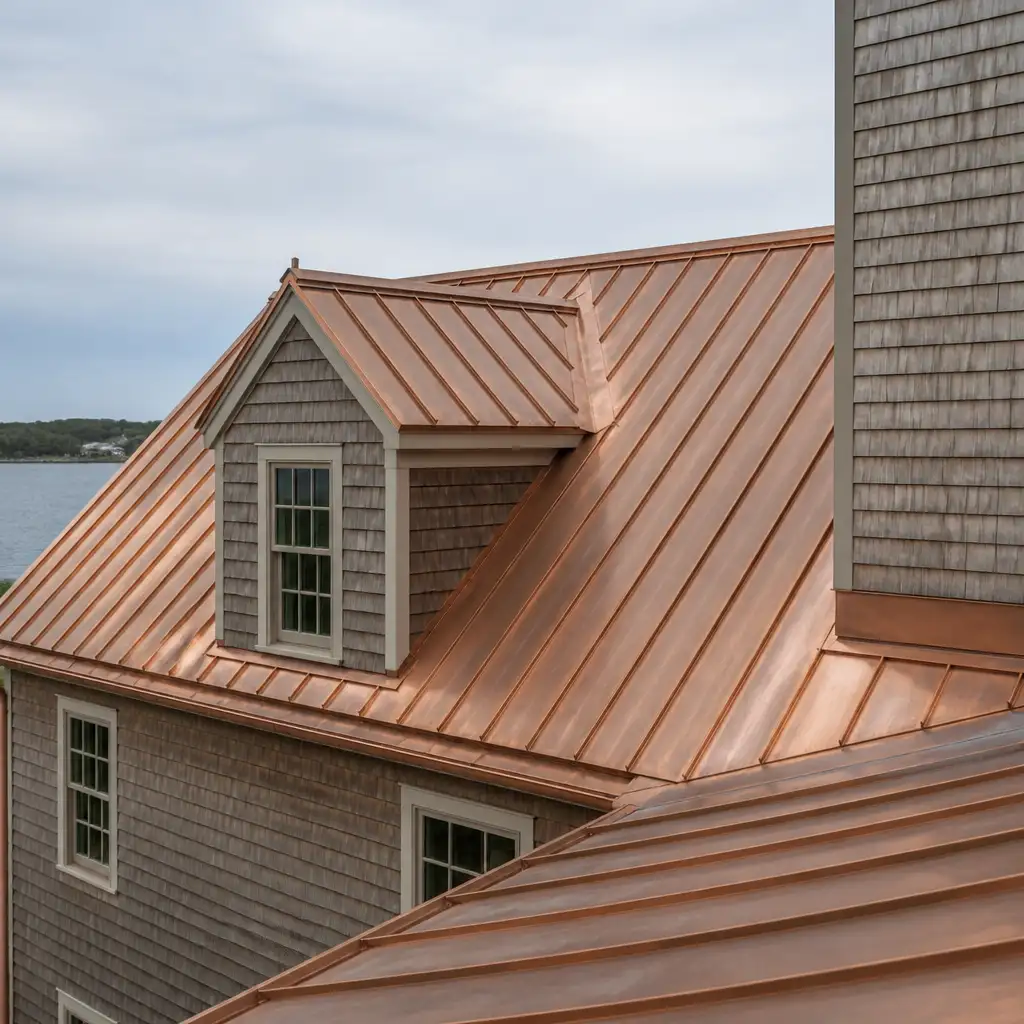
Choosing the correct copper weight is a routine but critical decision for roofing contractors and architectural metalworkers working in coastal Massachusetts and across New England. This article compares the common copper weights used for roofing and flashings—16 oz, 20 oz and 24 oz—focusing on performance in salt-air environments, fabrication and forming considerations, soldering practices, and long-term durability on Cape Cod projects.
Targeted at roofing contractors, suppliers, and restoration specialists, the guidance below is practical and experience-based. We address how each weight behaves as a roof panel material and as flashing, how it affects labour and detailing, and when to specify heavier material for historic restorations or exposed coastal locations.
Throughout the article we use industry terminology appropriate to the trade, highlight fabrication capabilities, and link to materials and services that matter to contractors. The goal is to help you match copper weights to the performance requirements of your project while maintaining best practice for fabrication and installation.
Key takeaways include comparative thickness and stiffness characteristics, soldering and seam considerations in salt air, and practical selection guidance for roof panels versus flashings in coastal Massachusetts. The discussion also notes trade-only fabrication resources available from Cape Cod Copper for contractors needing custom components produced to specification.
- Introduction
- Why copper weight matters for coastal roofing
- Comparing 16 oz, 20 oz and 24 oz copper: weight, thickness and properties
- Fabrication and forming considerations by weight
- Soldering, seams and long-term durability in salt-air environments
- Practical selection guide for roofing panels vs flashings
- Cost, installation labour and maintenance for Cape Cod projects
- Frequently Asked Questions
Why copper weight matters for coastal roofing
Copper weight directly influences stiffness, formability, resistance to wind uplift, and how an assembly behaves over time. On exposed Cape Cod rooflines and coastal properties, wind-driven rain, salt spray and thermal cycling place higher demands on metal roofing and flashing systems than inland sites. Selecting the right copper weights helps ensure the roof performs as intended and reduces the risk of deformation, premature fastener fatigue, or seam issues.
For flashings, the primary concerns are detailability and long-term clamp or solder integrity around chimneys, gutters, and wall intersections. Lighter weights are easier to form at tight inside and outside corners, but they will show more oil-canning and may be more vulnerable to mechanical damage during installation and service. Heavier weights resist denting and retain crisp profiles on standing seam panels but require different tooling and forming practices.
For roofing contractors and suppliers specifying materials, understanding how copper weights behave under the specific stresses of coastal Massachusetts weather leads to better client outcomes. This knowledge reduces callbacks and supports longer service life—especially important on historic restorations and high-exposure projects along the Southcoast and Cape Cod coastline.
Comparing 16 oz, 20 oz and 24 oz copper: weight, thickness and properties
Industry shorthand refers to weight per square foot: 16 oz, 20 oz and 24 oz copper. In general, 16 oz copper equals about 0.0216 inches (0.55 mm) thickness, 20 oz is roughly 0.0270 inches (0.69 mm), and 24 oz approximates 0.0324 inches (0.82 mm). These differences in thickness translate into measurable changes in stiffness and handling.
16 oz copper is widely used for flashings, gutters, and decorative details. It is highly formable, economical to handle, and well suited for applications where tight bends, complex transitions, or soldered seams are required. However, it is the least stiff of the three and will exhibit greater deflection under load or long unsupported spans.
20 oz copper is a compromise weight commonly specified for architectural roofing panels and heavier flashings. It provides improved stiffness and impact resistance while still allowing reliable forming and soldering. Many architects and contractors select 20 oz for standing seam roofs where a balance between durability and workable fabrication is needed.
24 oz copper is the heaviest of the three and is often reserved for historic restoration work, highly exposed roof areas, or where the client/spec requires greater longevity and robustness. 24 oz offers superior resistance to wind and mechanical damage and holds crisp profiles on complex panel profiles, but it increases material costs and requires more force and heavier tooling during fabrication.
When specifying copper for projects in coastal Massachusetts, consider both the immediate application—roof panel versus flashing—and the exposure class of the site. For example, open coastal headlands and waterfront structures typically benefit from heavier material where practical.
Fabrication and forming considerations by weight
Fabrication requirements change significantly between 16 oz and 24 oz copper. Lighter gauges are easier to roll-form, brake fold, and shape on radius seams. Heavier gauges need more robust CNC bending, precision forming, and occasionally annealing to prevent cracking when forming tight radii. Cape Cod Copper maintains CNC fabrication, precision bending, and roll forming capabilities to handle these differences across weights.
16 oz material is forgiving on hand-seamed details and makes small flashings and counterflashing economical to produce. For repeated production runs of custom flashings or moulded gutter components, the lighter weight can be quicker to process and easier to install on-site. That said, careful attention to support spacing and mechanical attachment is necessary to avoid oil-canning or movement.
20 oz and 24 oz require heavier tooling and may demand pre- and post-form annealing for certain complex shapes. For standing seam roof panels, roll-formed profiles in 20 oz are common; 24 oz is used where panel widths are larger or exposure demands more stiffness. When you need one-off or production runs outside standard offerings, trade professionals can turn to custom fabrication partners to produce made-to-spec panels and flashings. For contractor partners seeking production or custom solutions, refer to the company homepage for custom copper fabrication resources provided by Cape Cod Copper.
Soldering, seams and long-term durability in salt-air environments
Soldering practice is a core trade skill for copper flashings and details. All three weights solder well, but the thermal mass of thicker copper affects heat transfer during soldering. 24 oz will require more heat to reach appropriate solder flow and to form robust seams; this can influence solder technique and flux selection. Contractors must account for thicker material when planning solder operations so joints reach proper wetting without scorched flux or nearby substrate damage.
Salt air accelerates certain corrosion mechanisms in adjacent metals and can deposit chlorides that affect junctions, but copper itself develops a stable patina that protects the metal. The real issue in coastal environments is the interaction with other materials, fasteners, and poorly sealed joints. Proper soldering and through-fastening practices reduce opportunities for water ingress and protect the long-term integrity of the roof system.
On Cape Cod projects, we recommend specifying compatible fasteners, proper backing and edge support, and sealed transitions at chimneys, valleys and gutters. For chimney caps and vents fabricated in copper, ensure workmanship maintains consistent solder fillets and continuous coverage where required. For bespoke chimney caps or vents consider the company’s vents and chimney caps product line to source components that fit the detailing requirements of coastal restorations.
Practical selection guide for roofing panels vs flashings
When choosing copper weights, separate the decision between large-area roofing panels and smaller flashing elements. For standing seam or interlocking copper roof panels on exposed Cape Cod roofs, 20 oz is often the default choice balancing formability, wind resistance, and longevity. Use 24 oz where exposure is extreme, historical accuracy calls for heavier material, or when panel spans are wide and unsupported.
For flashings—step flashing, chimney counterflashing, valley liners, drip edges—16 oz is frequently suitable and preferred for ease of forming and soldering. Where flashings are subject to mechanical abuse, heavy foot traffic, or require long unsupported spans, spec 20 oz to improve stiffness and abrasion resistance.
Always coordinate material choices with the roof panel specification so transitions between panels and flashings behave predictably. For example, a 24 oz standing seam roof with 16 oz flashings requires thoughtful edge details and support to avoid differential movement and early wear. For contractors seeking pre-fabricated flashings or project-specific panels, the roofing panels and flashings product page offers examples of typical assemblies and detailing options supplied by experienced fabricators.
Cost, installation labour and maintenance for Cape Cod projects
Material cost increases with copper weight, and installation labour can rise as weights approach 24 oz due to handling and forming effort. Heavier copper demands more crew strength for large panel placements and may require additional equipment for safe lifting and alignment. Budgeting should include increased fabrication time for heavier material, possible annealing steps, and extra installation labour.
Maintenance differences are modest in terms of routine inspections—patina formation is expected across weights—but heavier materials can withstand incidental impacts and overtopping better than lighter gauges. On waterfront projects, schedule periodic inspections of soldered seams and fastener integrity to catch any wear accelerated by windborne debris or salt-laden mist.
For contractors, specifying the correct weight up front reduces lifecycle cost by minimising repairs and replacements. When in doubt about exposure or project specifics, consult with your fabrication partner early in the design phase to align panel profiles, flashing details, and copper weights with the installation approach and expected service conditions. To arrange project consultations or to request bespoke fabrication, contact Cape Cod Copper through the contact page to discuss project-specific requirements.
Frequently Asked Questions
Q: Which copper weight is best for standing seam roofs on exposed Cape Cod sites?
A: For exposed coastal sites we commonly recommend 20 oz as the balance of stiffness, formability and cost. Use 24 oz in extremely exposed locations, for historically accurate restorations that call for heavier gauge, or when panel spans are large and need the added rigidity.
Q: Is 16 oz copper acceptable for flashings in salt-air environments?
A: Yes—16 oz is widely used for flashings because it is highly formable and solders well. Where flashings are subject to higher mechanical stress or extended unsupported spans, consider specifying 20 oz for increased durability while keeping fabrication detail in mind.
Q: Do heavier copper weights require different soldering techniques?
A: Heavier gauges have greater thermal mass and require more heat to achieve proper solder wetting. Adjust torch technique and allow longer heating periods while protecting surrounding finishes. Experienced fabricators will plan soldering sequences to ensure reliable joints without overheating adjacent components.
Working from drawings, field measurements, or a custom detail? Cape Cod Copper partners with trade professionals to fabricate copper components made to fit the job, from custom flashings and roof panels to leader heads, chimney caps, vents, and decorative architectural details. Call (508) 946-1999 or email capecodcopper2@gmail.com to review your project requirements.