
Introduction
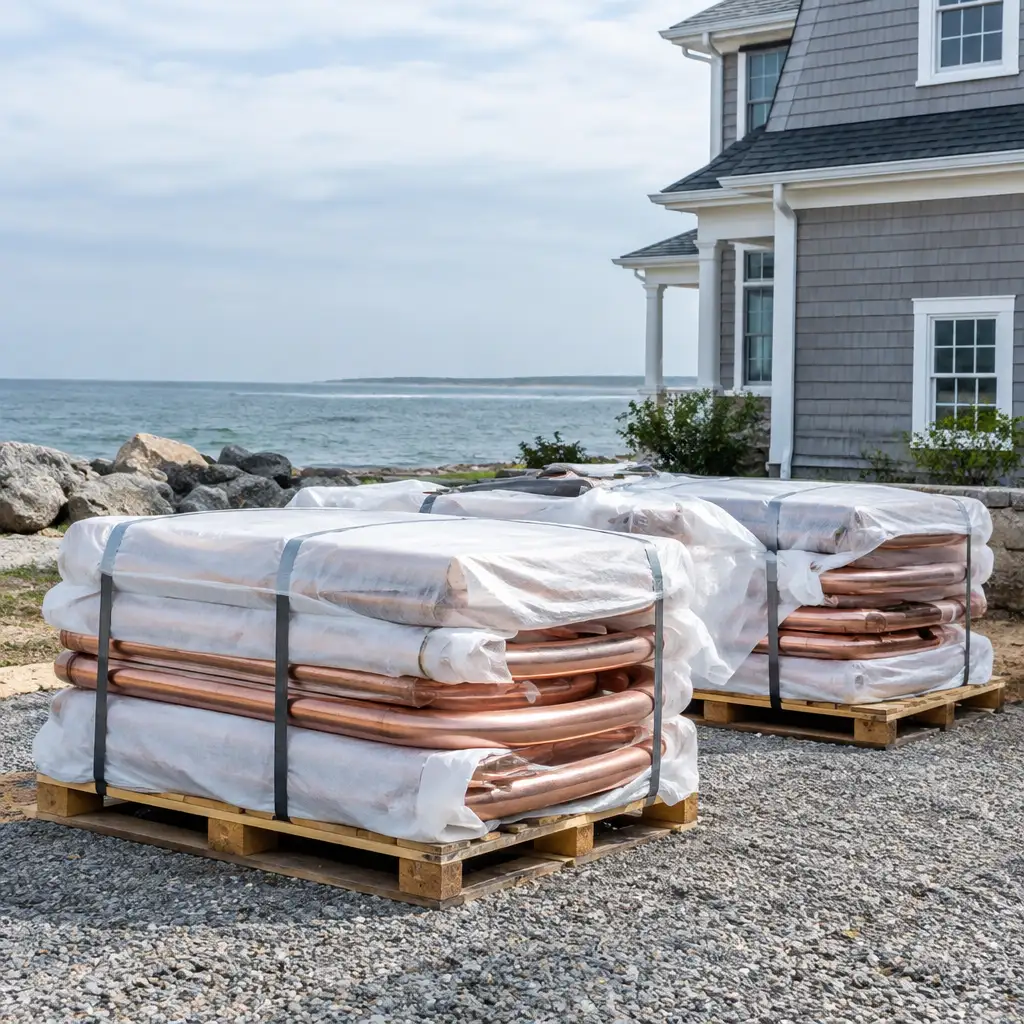
Managing deliveries of custom copper fabrication for coastal projects requires forethought, precise coordination, and practical on-site procedures. Contractors working in Southeastern Massachusetts and coastal New England face unique logistics challenges: tight site footprints, salt‑air exposure, variable weather windows, and trade‑only fabrication lead times. This article is written for roofing contractors, suppliers, restoration specialists, and project managers who rely on trade partners for architectural copper components.
We’ll cover how to coordinate lead times with a trade‑only fabricator, pack and transport copper to minimize damage, plan delivery windows around coastal conditions, and sequence on‑site storage and installation to reduce handling. The guidance reflects real‑world fabrication and field experience in Massachusetts and neighboring coastal regions.
Throughout this guide we reference practical checklists for packaging, temporary protection, delivery scheduling, and contractor‑fabricator communication. The goal is to help tradespeople preserve material quality, avoid reworks, and keep jobs running on schedule when ordering custom copper work.
Where relevant, this article links to Cape Cod Copper resources for product categories and contact information so contractors can quickly request quotes or discuss fabrication details with a trade‑only supplier.
- Introduction
- Planning lead times with a trade-only fabricator
- Packaging and transport checklist for custom copper fabrication
- Delivery windows, site access, and scheduling for coastal sites
- On-site storage, sequencing, and damage prevention
- Temporary on-site protection and installation staging
- Communication protocols and documentation when working with trade-only fabricators
- Frequently Asked Questions
Planning lead times with a trade-only fabricator
Custom copper fabrication requires early engagement. Unlike commodity roofing materials, architectural copper components are made to order from drawings, field measurements, or samples. Establish lead times at the project kickoff and lock in delivery windows before critical path milestones. When you order custom pieces — from standing seam panels to leader heads — your fabricator needs confirmed drawings and approved material choices to generate accurate schedules.
Work with a fabricator that understands contractor timetables and coastal construction constraints. Trade‑only partners that prioritize contractor relationships can provide pragmatic scheduling advice based on shop capacity, current backlog, and seasonal conditions in Massachusetts and New England. Explicitly agree on lead times in writing and build contingency for revision rounds and field measurement adjustments.
Early coordination reduces the risk of rushed onsite fits and field modifications. Provide the fabricator with realistic target install dates, access constraints, and staging limitations. If a project needs phased deliveries, specify sequencing dates and acceptance criteria for each shipment in the purchase order so the shop can plan production runs and protective packaging appropriately.
Packaging and transport checklist for custom copper fabrication
Proper packaging protects finished copper from dents, scratches, and contamination during transport and staging. Good packaging begins in the shop: separate finished items, wrap individual pieces, and use rigid crates or pallet boards for stacked items. Provide the driver and site supervisor with handling instructions so crews treat shipments as precision architectural components rather than bulk materials.
Below is a practical checklist contractors can use when receiving or requesting shipments of custom copper fabrication. Share this with your fabricator and site foreman to ensure consistent handling.
- Itemized packing list with part descriptions, dimensions, and quantity.
- Protective separation: kraft paper or foam between copper surfaces to prevent metal‑on‑metal contact.
- Rigid edge protection for long panels and profiles to reduce bending and denting.
- Water‑resistant outer wrap or shrink film to block direct rain, salt spray, and debris during short‑term transit.
- Label crates with orientation arrows and “handle with care” notes (for drivers and riggers only; avoid public-facing signage).
- Palletized crates secured with straps and blocking to prevent shifting during transport.
- Delivery manifest and photos of packaged goods uploaded to a shared folder or emailed to the site contact.
- Inspection checklist for site receipt: visual condition, count, and sign‑off by the receiving foreman.
Including a clear packaging specification in the purchase order ensures the fabricator ships products that meet your jobsite protection standards. For roof panels, flashings, gutters, and other product categories, reference the relevant shop procedures so everyone knows expectations before items leave the shop.
Delivery windows, site access, and scheduling for coastal sites
Coastal Massachusetts jobs often have limited access and narrow delivery windows due to tidal schedules, local permitting, and tight neighborhood streets. Coordinate with the fabricator, trucking company, and site superintendent to choose delivery days and times that minimize exposure to salt spray and peak weather events. Early morning deliveries are frequently preferred to allow unloading and staging before wind gusts rise in the afternoon.
Confirm site access details in writing: gate codes, loading zones, crane or lift availability, and required traffic control. For sites on Cape Cod or the Southcoast, include any local restrictions on large vehicle movement or noise ordinances that may affect delivery timing. If a crane is required to move crates to elevated staging, schedule the crane operator and confirm lift plans prior to delivery.
When ordering from a trade‑only fabricator, specify a delivery window in the contract and allow the shop to propose two or three date options that align with their production schedule. Include a contact list for the truck driver and site lead and require a phone call 24 hours and 1–2 hours before arrival. This helps ensure the receiving crew is ready and reduces time materials spend exposed on site.
On-site storage, sequencing, and damage prevention
How materials are stored on site often determines whether copper arrives at its install location in serviceable condition. Use dedicated, elevated storage areas that keep copper off the ground and away from standing water, collected debris, and corrosive materials like lime or mortar. For coastal projects, locate storage away from direct salt spray where practical, and rotate stock so pieces scheduled for immediate use are most accessible.
Sequence deliveries to match installation order. For example, deliver flashings and trim for the initial roof run before the more extensive panel shipments. Staging smaller items near the work face reduces repeated handling of larger crates and limits the number of manual lifts across the roof. When multiple trades operate simultaneously, coordinate sequences to prevent damage from foot traffic, material drops, or scaffold movement.
Implement simple on‑site controls to protect finished copper: use moving blankets under material handling routes, assign a dedicated rigger for copper lifts, and store loose fasteners, clips, and accessories separately in labeled containers. Keep a jobsite damage log and photo records; if damage occurs during handling or storage, document it immediately and notify the fabricator per the agreed claims procedure.
Temporary on-site protection and installation staging
Temporary protection is essential on coastal jobs where weather windows can change quickly. Protect standing seam panels, gutters, and decorative components against blowoff, abrasion, and contamination with breathable covers and mechanical restraints. Avoid plastic sheeting that can trap condensation against copper surfaces for extended periods.
For rooftop staging, build temporary platforms or use pallet cradles anchored to the roof structure rather than stacking crates directly on finished underlayment. If you must store panels on the roof deck, place non‑staining separators underneath and ensure load distribution avoids concentrated points that could dent panels. For gutters and downspouts, hang protective rails or padded brackets to avoid metal edges contacting other materials.
Include sequencing markers on crates to indicate installation order, but avoid any labels or signage visible to the public. Instead, keep a simple mapping sheet in the site trailer that lists crate numbers, contents, and the intended installation area. That reduces unnecessary moves and helps crews pull the correct pieces for each work shift.
Communication protocols and documentation when working with trade-only fabricators
Clear communication reduces errors. Because trade‑only fabricators do not sell direct to homeowners, they rely on contractor partners for accurate requirements and field feedback. Use a single point of contact on both sides to manage changes, RFIs, and signoffs. That person should handle submittals, markups, and field measurement clarifications so the shop has one consolidated source of truth.
Standardize documentation: approved shop drawings, a written change order process, photos of site conditions, and a delivery acceptance form. Share all relevant site constraints up front — roof slopes, parapet heights, and existing substrate conditions — so the fabricator can plan return bends, hem sizes, and seams that fit the actual field conditions. When possible, provide measured drawings or field templates rather than rough sketches.
When you need to request revisions, follow a documented workflow: capture the issue with photos, describe the desired change, request a cost/time impact estimate, and obtain written approval before fabrication changes proceed. For project inquiries or to arrange preproduction reviews, contact Cape Cod Copper through the company site or to discuss project specifics directly, go to contact Cape Cod Copper. Keeping communication channels organized reduces rework and helps maintain the fabricator’s production schedule.
Frequently Asked Questions
Q: What is a typical lead time for custom copper fabrication?
A: Lead times vary with complexity, shop backlog, and material availability. For standard custom runs expect several weeks; for one‑off or highly detailed pieces allow additional time for drawings, approvals, and finishing. Confirm timelines with the fabricator at contract stage and include contingency for revisions.
Q: How should we protect copper panels on a windy coastal site?
A: Use breathable covers secured to pallet cradles or roof anchors, avoid loose plastic that can flap, and stage materials in sheltered areas when possible. Anchor all crates and use minimal exposure times between delivery and installation to limit salt spray and wind damage.
Q: Can a trade‑only fabricator coordinate delivery directly to the site?
A: Yes. Trade‑only fabricators commonly arrange transportation to the jobsite and will coordinate with your crew for timing and lift plans. Provide access details, contact numbers, and any special permitting requirements when placing the order so the fabricator can plan the delivery accordingly.
Working from drawings, field measurements, or a custom detail? Cape Cod Copper partners with trade professionals to fabricate copper components made to fit the job, from custom flashings and roof panels to leader heads, chimney caps, vents, and decorative architectural details. Call (508) 946-1999 or email capecodcopper2@gmail.com to review your project requirements.