
Introduction
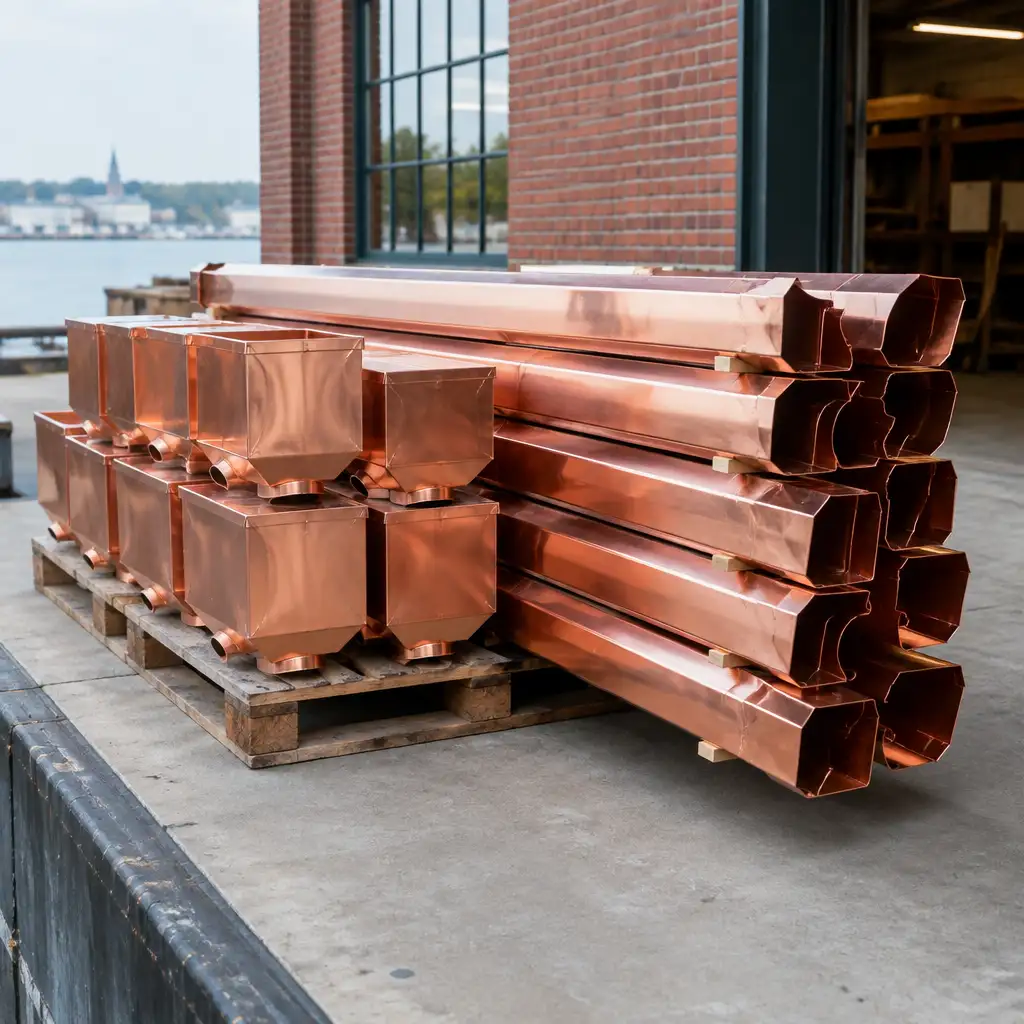
Preparing precise bid specifications and alternate copper details is essential for contractors bidding historic restoration work across Southeastern Massachusetts. Clear, trade-focused specifications reduce ambiguity, speed quoting, and ensure fabricated components meet field conditions and preservation standards. This guide focuses on practical, contractor-oriented advice for writing specifications that lead to accurate quotes from trade-only suppliers and efficient copper fabrication Massachusetts.
Audience members for this guide are roofing contractors, restoration specialists, architectural metal contractors, and project managers who specify or procure architectural copper for historic buildings. The strategies below are grounded in real-world fabrication constraints, common pitfalls in restoration work, and the expectations of New England fabricators experienced with traditional materials and coastal exposures.
We will cover scope definition, acceptable alternates, shop drawing expectations, measurement tolerances, bid package structure, and coordination best practices — all with an eye toward minimizing change orders and ensuring on-time delivery. Examples and sample language are included to help you translate performance needs into unambiguous contract documents suitable for Southeastern Massachusetts projects.
References to local conditions — such as coastal exposure, traditional flashing methods, and patina expectations — are woven through the guidance so specifications reflect regional realities rather than generic language. The guidance assumes the reader will work with trade-only fabricators and prioritizes clarity over marketing phrasing.
- Introduction
- Defining Scope and Performance Requirements for Historic Copper Work
- Specifying Acceptable Alternate Materials and Details
- Drawing and Shop Drawing Requirements for Trade-Only Fabricators
- Measurement Tolerances, Seams, and Soldering Standards
- Typical Bid Specification Language and Bid Packages
- Scheduling, Lead Times, and Coordination with Fabricators
- Frequently Asked Questions
Defining Scope and Performance Requirements for Historic Copper Work
Begin every copper specification with a clear scope that delineates finished items, substrate interfaces, and preservations standards. State whether the work includes supply only, supply-and-install, or fabrication to measured drawings. For historic restoration, include preservation standards (e.g., match existing profiles, maintain visible joint types) and identify any regulatory approvals required by local historical commissions.
List materials explicitly: sheet weight (for example, 16 oz, 20 oz, 24 oz), alloy (architectural copper), and finish expectations (mill finish or installed patina allowance). Where lead-coated copper or special alloys are required, state them upfront. Example line: “Provide 20 oz architectural copper for flashings and leader heads unless noted otherwise; all copper to meet ASTM B370 thickness tolerances.”
Address interfaces: define how copper will be joined to masonry, wood, and roofing substrates, and specify fastener types, backing plates, and slip-joint expectations. Where brick or stone is present, require through-wall flashing details and note existing mortar joint conditions that affect anchorage.
To help fabricators estimate accurately, include approximate quantities, typical lengths, and sketches of unique details. Even schematic elevations or photographs annotated with dimensions reduce assumptions and requests for clarification during bidding.
Specifying Acceptable Alternate Materials and Details
Historic projects often present unknowns that tempt contractors to propose alternates. Define acceptable alternates precisely to avoid substituting materials that compromise appearance or long-term performance. For example, if you accept lead-coated copper for flashing but not for decorative elements, state that explicitly.
When listing alternates, couple each acceptable alternate with performance criteria: corrosion resistance, finish appearance, seam type, and compatibility with adjacent materials. For instance: “Alternate: 24 oz lead-coated copper allowed for parapet copings when existing assemblies indicate lead presence; alternate must match profile and be solderable for continuous seams.”
Avoid open-ended language like “or equal.” Instead, require submittals for any alternate including samples, manufacturer data, and a statement of differences. For historic restoration, require photographic or shop-sample approval from the architect or preservation consultant prior to fabrication.
Include conditional alternates in the bid form where useful: list primary specified assemblies and an alternates section that bidders must price separately. This preserves apples-to-apples comparisons between bidders while allowing the owner flexibility if budget or availability requires a different approach.
Drawing and Shop Drawing Requirements for Trade-Only Fabricators
Trade-only fabricators expect clear requirements for the level of detail and the timing of shop drawings. Spell out what you need: full-size patterns, fabrication notes, seam and solder callouts, anchor locations, and finish instructions. Require shop drawings early enough to permit review and field verification before fabrication begins.
Include submission schedules: for example, “Preliminary shop drawings due within 10 business days of award; final shop drawings with field-measured dimensions due 5 business days after on-site verification.” Requiring staged reviews prevents late-stage changes and helps manage lead times in the shop.
Specify tolerances on shop drawings: indicate allowable variance for length, width, and formed profiles. Provide clear instructions on who is responsible for field measurement verification — typically the installing contractor — and require that shop drawings carry an installer sign-off line confirming dimensions prior to fabrication.
Request material and pattern samples for non-standard profiles or patina finishes. For historic profiles, require a small mock-up or sample assembly that the fabricator produces from final drawings so the architect and contractor can sign off before full production.
Measurement Tolerances, Seams, and Soldering Standards
Include realistic fabrication tolerances in the specs that reflect both architectural intent and fabrication capabilities. Typical sheet metal tolerances for custom copper work should be written as absolute or percentage values and tied to relevant dimensions. For example: “Linear dimensions ±1/8 inch for pieces under 8 feet; ±1/4 inch for lengths over 8 feet; formed radii ±1/8 inch.”
Define seam types for different applications: standing seams for roof panels, single-lock or double-lock seams for exposed edges, and soldered seams for leader boxes and decorative details. For historic restoration, specify traditional seam methods when visible workmanship affects appearance. Where soldering is required, state the solder alloy and wetting expectations, and whether seams must be flushed and dressed.
List acceptable seam finishes and inspection criteria. For example: “Continuous soldered seams in exposed conditions; no open channels; solder fillets to be smooth and dressed to flush appearance. Fabricator must inspect and certify seam integrity prior to shipment.” This prevents back-and-forth after delivery and ensures the field crew sees consistent workmanship.
Address expansion and movement: specify slip joints and expansion gap allowances at long runs, and indicate fastener spacing and backing requirements to limit stress on seams. In coastal Massachusetts, thermal movement matters — explicit movement joints help prevent buckling and avoid additional onsite modifications.
Typical Bid Specification Language and Bid Packages
Provide bidders with a well-organized bid package that includes: scope narrative, drawings/sketches, quantities, material specifications, alternates, submittal schedule, and field verification responsibilities. Include a bid form that separates unit pricing for common items (e.g., linear foot of drip edge, leader head assembly) to make comparisons straightforward.
Include sample specification clauses you expect bidders to accept. Example clause: “Fabrication tolerances per Section X; fabricator to provide final shop drawings and receive written approval prior to commencing fabrication. Installer to verify all field dimensions and accept responsibility for minor fitting adjustments on site.” Language like this clarifies responsibilities and reduces claims for extra work.
Ask for lead-time confirmations and shop capacity statements in bids. Require bidders to acknowledge special historic requirements, such as matching existing profiles or providing mock-ups. Where applicable, require that bidders be prepared to work with preservation consultants and comply with local historical commission requirements.
To make bids comparable, require a consistent basis of estimate: specify whether the fabricator should assume shop-formed corners, site-fitting allowances, or field-soldering. When possible, attach template drawings for recurring details so fabricators price the same geometry.
Scheduling, Lead Times, and Coordination with Fabricators
Lead times for custom copper products vary with shop workload, material availability, and the complexity of details. State expected procurement lead times in the specification and require bidders to provide firm fabrication and delivery schedules. For Southeastern Massachusetts projects, allow additional time for coastal delivery and field fitting when access to the building is constrained.
Coordinate on-site measurement windows before fabrication starts. A useful specification item is a mandatory on-site measurement period: the fabricator or the contractor’s representative must confirm critical dimensions within a specific timeframe after mobilization. This avoids ordering based on drawings that later prove to be inaccurate.
Include staging and delivery requirements: whether large assemblies are delivered in pieces for site assembly, or fully assembled for crane set. Note any restricted-lift conditions, historic-site access limitations, or municipal loading restrictions typical in New England towns. Requiring delivery method details in bids eliminates surprises and helps schedule installers.
Encourage early communication between the contractor, preservation consultant, and fabricator. A short coordination meeting after award — either on-site or virtual — can resolve questions about profiles, attachment strategies, and prefabrication tolerances. For recurring work, establish a single point of contact at the fabricator to maintain continuity.
Frequently Asked Questions
Q: What information should I always include when requesting a quote for custom copper fabrication?
A: Include scope of work, material gauge and alloy, sketches or measured dimensions, attachment details, desired seam types, finish expectations, and required delivery dates. Indicate whether you want shop drawings and if field measurement verification will be provided prior to fabrication.
Q: How should I specify alternates without creating confusion during bidding?
A: List alternates explicitly with performance criteria and require submittals for each alternate. Avoid generic “or equal” phrasing; instead specify allowable materials and require fabricator samples or mock-ups for approval before fabrication.
Q: What are reasonable tolerances and seam standards to include for historic restoration copper work?
A: Reasonable tolerances might be ±1/8″ for pieces under 8′ and ±1/4″ over 8′. Specify seam types by application (e.g., double-lock standing seam for roof panels, continuous soldered seams for leader boxes) and call out inspection criteria and certification of seam integrity before shipment.
For contractor resources and to learn more about our fabrication capabilities, see Cape Cod Copper for company information and trade-only service policies. When your bid package involves custom roof components or complex flashing details, reference our roofing panels and flashings product descriptions to align expectations on profiles and seam types. For decorative or historic leader work, consult our leader boxes and finials resources for examples of shop-fabricated assemblies.
When you’re ready to progress from specification to fabrication, contact Cape Cod Copper to discuss shop drawing schedules, lead times, and measurement verification. Early coordination with a trade-only fabricator avoids late design changes and reduces risk on historic restoration projects in New England.
Working from drawings, field measurements, or a custom detail? Cape Cod Copper partners with trade professionals to fabricate copper components made to fit the job, from custom flashings and roof panels to leader heads, chimney caps, vents, and decorative architectural details. Call (508) 946-1999 or email capecodcopper2@gmail.com to review your project requirements.